
Accidentally organic - take a look at the dairy doing it naturally
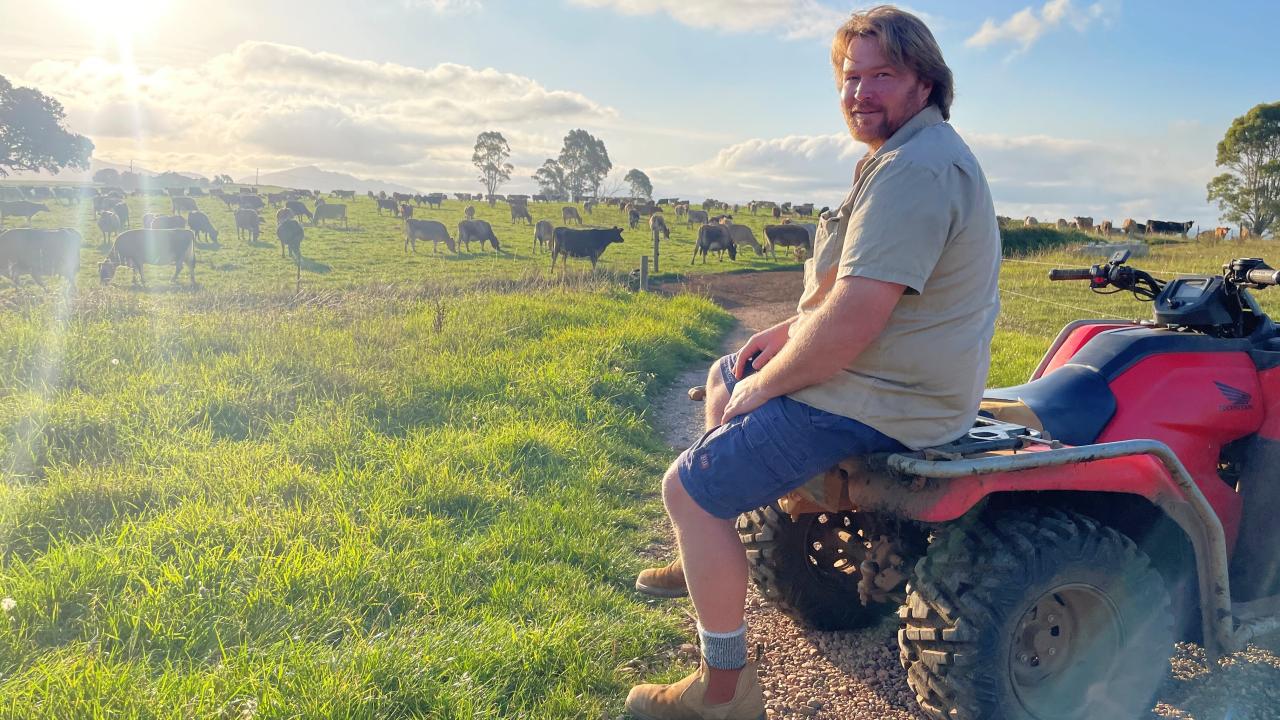
Walk a mile in the shoes of organic dairy farmer Mark Lambert at Mersey Vale Dairies at Sunnyside, and there’s a good chance you will be amazed at what can be achieved outside the conventional dairy landscape.
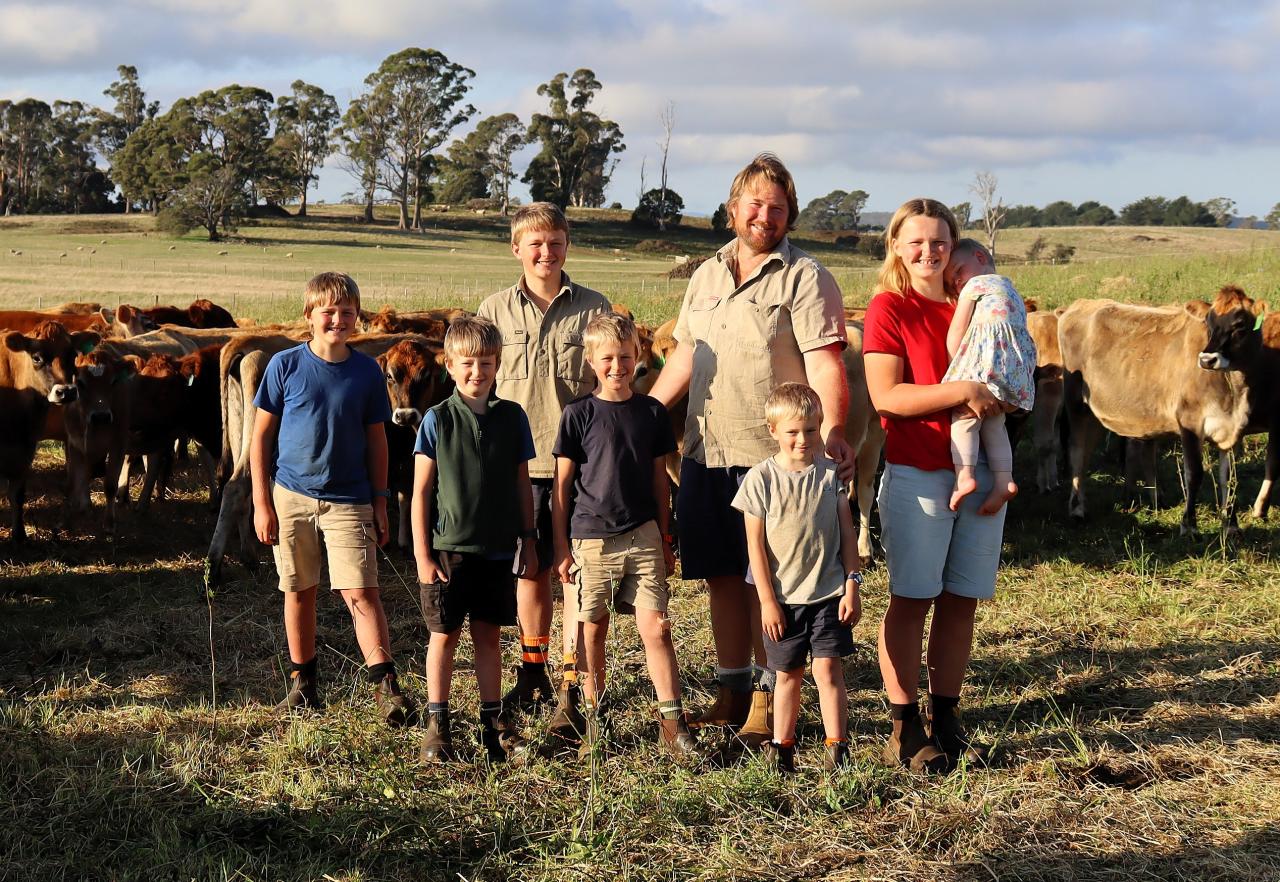
The quietly spoken 48-year-old has built a life for his wife Rosalin and their 10 children, based on regenerative farming practices, organic milk production and the kind of work/life balance that some can only dream about.
The family also runs 70 ewes, 100 beef cattle, have 200 chooks and keep bees for honey.
An old disused dairy has been converted to an on-farm butchery for processing of meat grown on the property for consumption by people on the farm.
On May 13 the Lamberts will host a farm walk, organised by the recently formed Tasmanian Organic Milk Co-op and milk processor Australian Consolidated Milk (ACM), to talk about the business and growing future requirements for organic milk.
The Co-Op has been working to pool the resources of the state’s seven organic producers and boost the profitability of its milk as well as the number of organic dairy farms.
Since last year it has collectively talked to a number of processors and changed from its long-time processor, Fonterra, to supplying ACM, based in northern Victoria, which was more than keen to get its hands on nine million litres of Tasmania’s purest milk.
With a co-ordinated approach from organic dairy farmers and in a climate of extreme input cost inflation, Mr Lambert reckons it’s the perfect time for milk producers to consider whether organic dairying could be an option to reduce reliance on outside inputs and earn a premium.
Admitting that he’s “accidentally organic”, Mr Lambert is a second-generation dairy farmer and had already taken his share of the family property well down the path of regenerative farming when he started getting questioned on why he hadn’t gone organic.
“I drifted slowly into the process over a seven or eight-year period – becoming fully organic takes at least three years to achieve and we received our certification in 2018,” Mr Lambert said.
Since then what the 415ha farm and another 94ha of leased land has achieved is remarkable.
The 48-unit double up dairy and the equivalent of six full-time employees milks around 580 cows, 609 at peak production, and is closing in on 1.9 megalitres of milk produced in a year and 180,000kg of milk solids.
Considering that the cows are milked 10 times in seven days, then eight in seven, then during autumn and winter only once a day, the volume will soon be slightly above what was achieved with conventional twice-a-day milking back in 2012 to 2018.
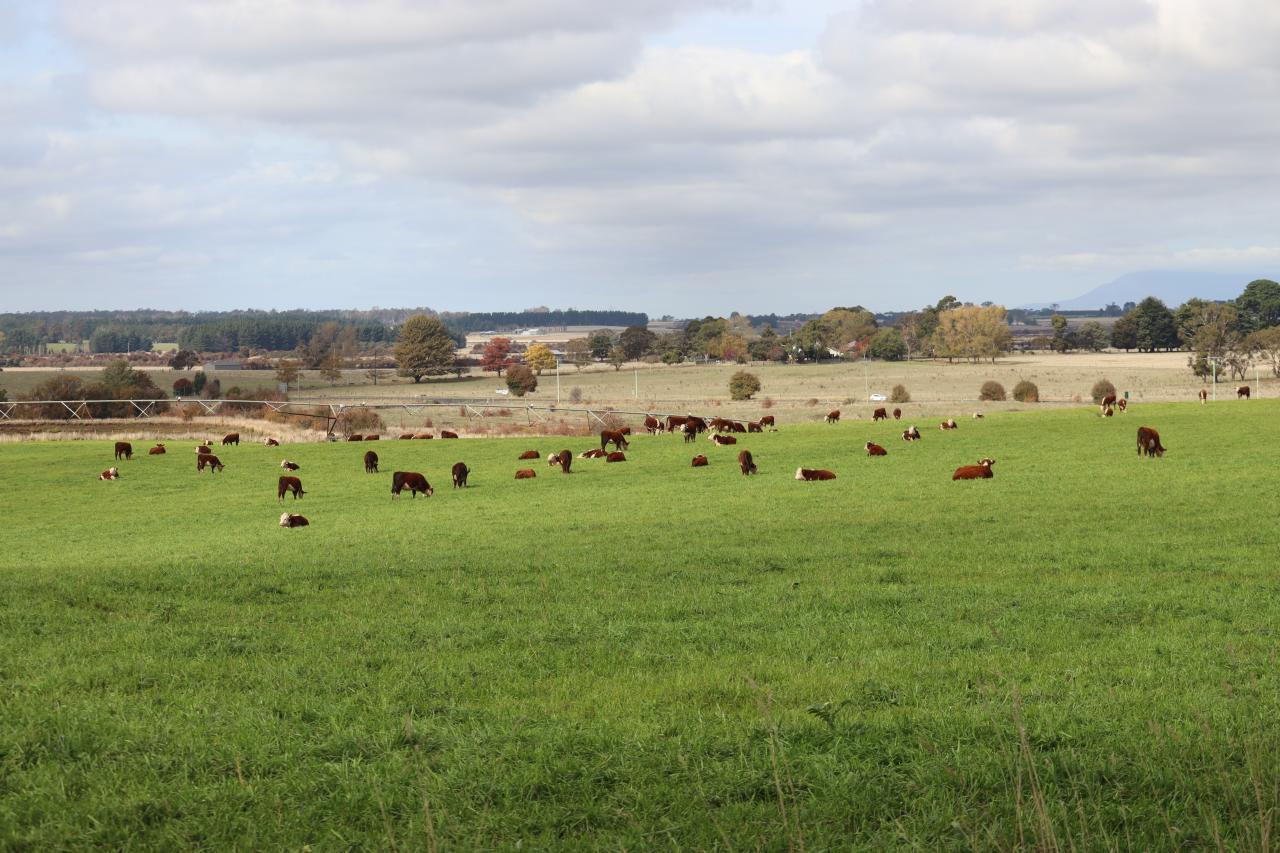
As a centrally located, showpiece farm for organic dairy practises, Mr Lambert often gives farm tours to those who recognise how uniquely the farm is set up and managed.
“We have been going down this path for years and years and where we were once ostracised, the past four years has seen people come to us in droves wanting to know how we do it,” he said.
“This has been our most profitable year ever – 18 percent above the average production in recent years.”
Never afraid to try something new, last year’s experiment rearing all of the calves on the cows did not work out financially, however it did lead to a more natural way of calf-rearing.
“We’re feeding them for three-and-half-months, two-and-a-half months as much as they can drink in a day, and that has led to a big improvement in how those calves grow,” Mr Lambert said.
“We are trying to replicate how they would feed naturally rather than the industry standard of having a restricted amount of milk and being fed a lot of pellets.
“The calves are also reared in moveable sheds, repurposed chicken tractors with plenty of straw bedding, which has really helped with next to no disease or sickness.”
The Lamberts choose not to feed grain, there are no synthetic fertilisers and they prefer pure jersey cattle over crossbreeds.
The fields are filled with a mixture of productive species - different clovers, lucerne, chicory, plantain and herbs which are less susceptible to pests and damage and continue growing in dry conditions.
About 25 percent of the hay on the farm is kept as standing hay to be fed off in the autumn and early winter.
Having longer pasture rotations and standing hay results in savings of about a third or former diesel costs.
Tasmanian Organic Milk Co-op president Matthew Gunningham said that its members are pleased to be looking at a more stable, long-term future of supply with ACM and while it collectively held its breath with the changeover, all has been running smoothly.
“It’s all been working well since September last year when we had built up enough supply to fill a container every day,” he said.
“We’re currently receiving $11 per kilo milk solids and there’s been an increase flagged for next season, so I think it’s a very suitable climate for organic dairy farming in the state.”
“We want to continue to grow the organic milk pool, which is mainly based in the north-west, and the members firmly believe in what we’re doing and really enjoy farming this way.
“There’s a lot of consumers out there concerned about the residues of agricultural inputs in their food and there’s a growing body of research that points to higher nutrient density in organic products.”
The farm walk at Mersey Vale Dairies, 430 Sunnyside Road, Sunnyside (near Railton) on May 13 starts at 11am and lunch is provided.
RSVP to Mark on 0439 961 393 by May 10.


Add new comment