
Senate enquiry into hemp industry holds public hearing at Longford
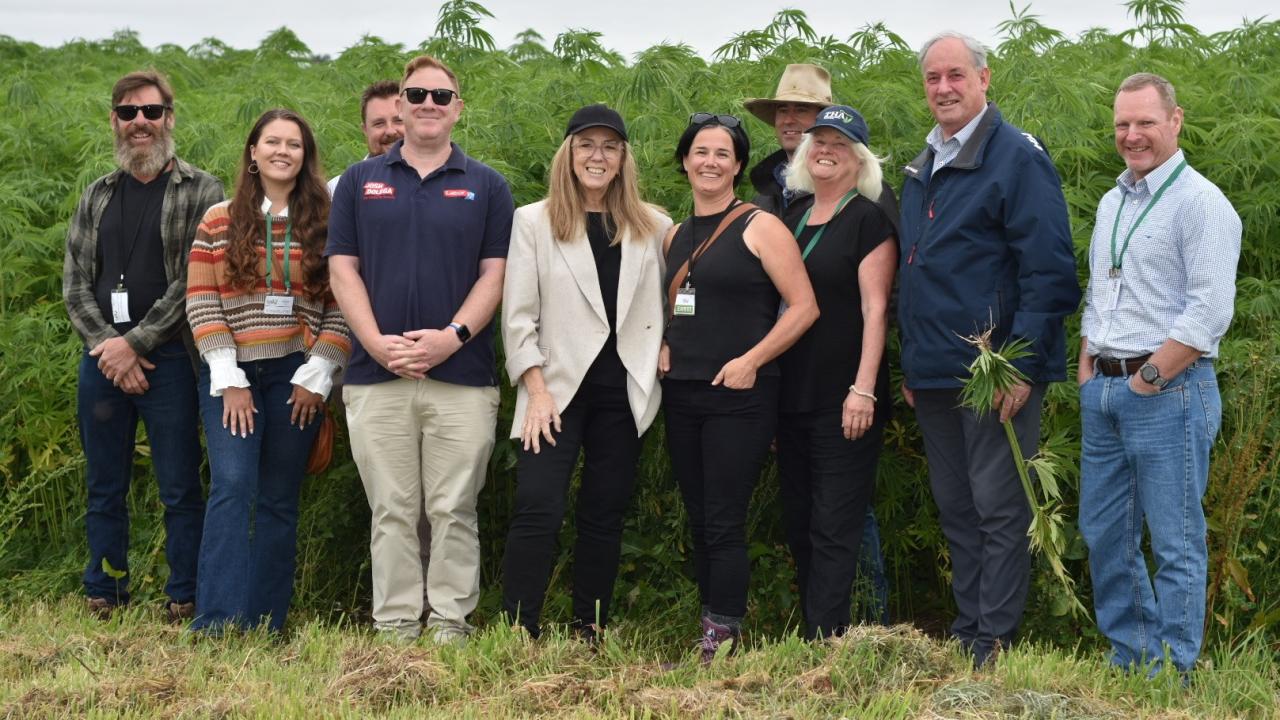
The industrial hemp industry’s ongoing battle against the stigma related to cannabis and restrictive classifications imposed by national regulatory bodies was the emerging theme at the public Senate hearing held at Longford on Wednesday.
The state’s peak body for the hemp industry in Tasmania, the Tasmanian Hemp Association, welcomed members of the Senate Standing Committees on Rural and Regional Affairs and Transport
this week to discuss the opportunities for the development of a hemp industry in Australia.
It was preceded with a full-day tour of hemp-related farms and businesses that covered all aspects of hemp growing and processing and showcased the products already in wide use from building materials to food products.
Delegates visited hemp growers Nick and George Mills’ operation at Panshanger Estate near Longford, new grower Lynne Mason at The Moat at Hagley, Morgan Leith at Tassie Seeds at Bridgenorth, hemp food producer Hemp Harvests at Red Hills, hemp fibre processor X-Hemp at Cressy and the medicinal cannabis cultivation and processing business Hale Farm near Bracknell.
THA president Andi Lucas, a hemp business owner and industry veteran, said the timing is right for a focus on hemp growth in the industry.
“Hemp is expanding rapidly in global food, fibre and sustainable materials markets, and
Australia must move decisively to secure its share of this growth while international demand,
investment and policy momentum are accelerating,” she said.
“We need a coordinated National Hemp Strategy, backed by recurrent investment in industry
development bodies, infrastructure and workforce capability, to unlock the full potential of
this sector.”
Having spoken at length during the enquiry, alongside another five submissions representing TasFarmers, the State Government and various hemp businesses, Ms Lucas was hopeful that the federal government would champion the industry and invest in its future.
“We need to make sure there’s no grey areas or that anyone things this is a drug product – we’re still battling that stigma,’ she said.
“The Senate will have left understanding what industrial hemp is, that it’s a food and fibre crop, they will know that it has therapeutic benefits and that it’s not a drug.”
Ms Lucas said that many submissions to the hearing were critical of national legislation that doesn’t recognise industrial hemp’s low level of THC (under 1 percent).
“It’s not a poison and it needs to be removed from the Drug Act to unlock its full potential for things like animal feed and extraction processes for health products,” Ms Lucas said.
“Putting it in the same category as serious drugs affects the perceived risk for investors - in a tough economic climate for investment it’s enough for some to say it’s too early to get involved.
“National alignment, investment in processing capability, workforce and export branding will
help the industry to grow and ensure that it is not constrained by fragmented policy or limited
infrastructure. With coordinated implementation and strategic investment, Tasmania can
help lead a resilient, climate smart and globally competitive Australian hemp industry.”
Senator Richard Colbeck, acting chair of the enquiry, said that it was “really useful to see the industry first-hand in Tasmania”.
He noted that one of the key things that's important for the future of the industry is being able to fully utilise the plant, so that, as an example, when hemp is grown for seed the fibre can also be used to make the industry more viable.
“There's a few international issues that have cropped up and a few regulatory issues so we will go away and work out what recommendations we can make to inform the regulatory frameworks that exist both in Tasmania and nationally,” Senator Colbeck said.
“Tasmania in particular has been very proactive with its regulatory frameworks - in fact nation-leading - other jurisdictions are turning to us to see how we do it as they look for similar frameworks.”
Long-term proponent of the hemp industry, Green Senator Peter Wish-Wilson, sat on the enquiry panel and acknowledged that it’s been a slow process to get industrial hemp recognised for its true potential.
What impressed me was that a number of submitters and the community, industry and workers we’ve talked to in recent days have outlined consistent recommendations for the committee and a lot go the heart of some regulations that need to change,” he said.
“It’s great to be informed by an industry that is well organised and shows a level of maturity and that’s respected by senators.
“I’d say the evidence we’ve received demonstrates the industry has a bright future but it does need government assistance.”
“Hemp is an incredible plant and it could be a huge growth industry for Tasmania.”

Add new comment