
TasFarmers Matters - Irrigation returns a priority
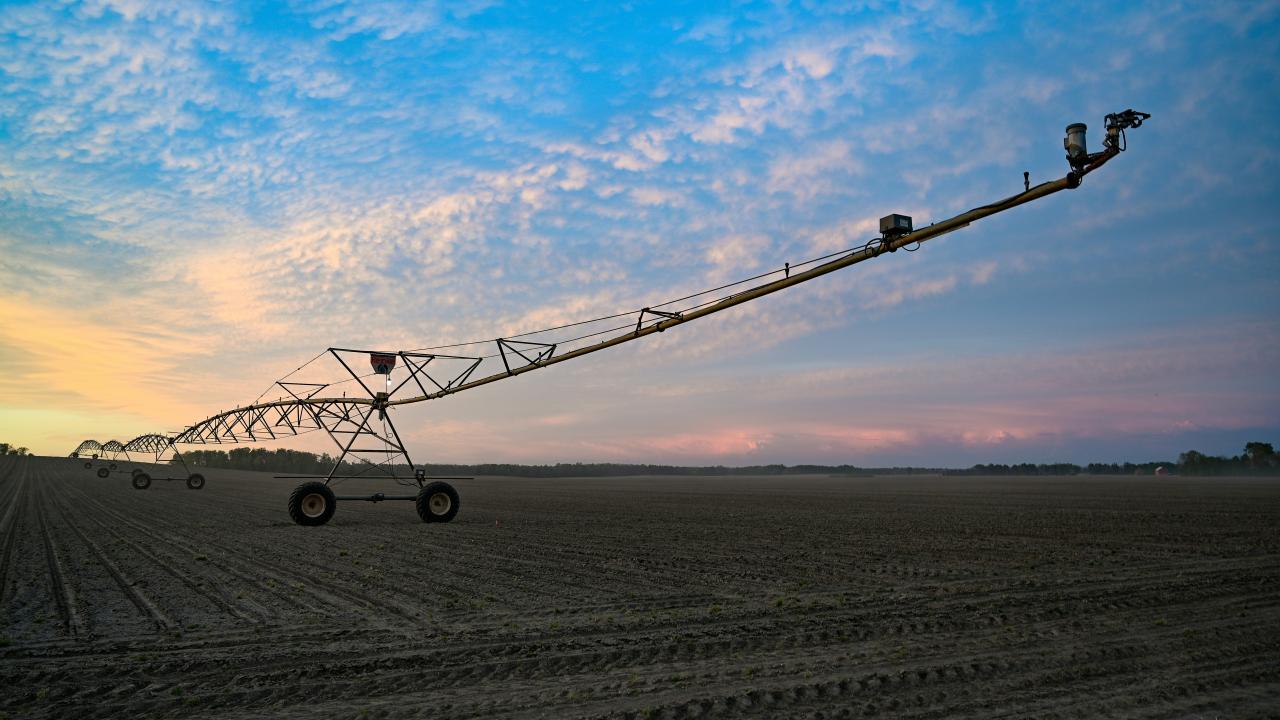
Tasmania's next round of irrigation projects has been dropped from the national infrastructure priority list, raising serious questions about why the Commonwealth would sideline one of Australia’s most productive agricultural investments.
Infrastructure Australia this month removed Tasmanian Irrigation’s proposed Tranche 3 developments from its priority list.
For farmers, the decision is difficult to understand. Tasmania is one of the few regions in Australia capable of reliably increasing food production. Reliable rainfall, a temperate climate and abundant water resources give the state a natural advantage in producing high-value food for domestic and export markets.
Tasmania’s irrigation program is widely regarded as one of the country’s most successful agricultural infrastructure investments. Since its creation in 2008, Tasmanian Irrigation has delivered multiple irrigation projects, creating thousands of megalitres of high-reliability irrigation water.
Farmers have paid for access to this water and have invested heavily in on-farm infrastructure to use it.
Productivity has lifted, with high-value horticulture and viticulture expanding, regional employment growing, and private capital investment following. Importantly, these schemes are not traditional subsidies. Farmers pay for water entitlements, meaning public investment triggers significant private investment.
The economic impact is measurable. By Tasmanian Irrigation’s reckoning, for every 1,000 megalitres of Tasmanian Irrigation water delivered, about 25 direct and indirect jobs are supported, farmers invest between $2 million and $4 million on farm, and up to $3 million a year flows into the wider Tasmanian economy. Few regional infrastructure programs deliver that kind of return. Reliable irrigation water allows farmers to shift from lower-value dryland production to higher-value cropping systems. That supports jobs not only on farms but across regional processing, logistics and export supply chains.
The decision not to prioritise these schemes sits uneasily alongside the Commonwealth’s broader spending priorities.
Australia is operating with historically high levels of public expenditure. In that context, is it not reasonable to ask how infrastructure priorities are set? Tasmanian irrigation projects are modest compared with large metropolitan transport developments. Yet the economic impact in regional areas of irrigation projects is substantial.
The decision also appears inconsistent with the Commonwealth’s focus on improving national productivity. Treasurer Jim Chalmers has repeatedly said lifting productivity will be essential to sustaining economic growth and living standards. Irrigation investment delivers exactly that.
It unlocks productive capacity from existing farmland. It encourages private capital investment by farmers. It supports export growth and strengthens regional economies. Few infrastructure investments provide such a direct productivity gain. Simply put, irrigation allows farmers to produce more from the same land while reducing production risk.
Australian farmers are facing increasing climate variability, more droughts, more intense rainfall events and longer dry periods between them. The challenge is simple: how do we maintain reliable food production in a more variable climate?
Expanding irrigation is one of the most practical answers, as water storage and delivery systems help stabilise yields, maintain domestic supply and protect regional economies during dry seasons.
Beyond forfeiting productivity gains, failing to expand irrigation capacity in Tasmania risks squandering an opportunity to strengthen Australia’s long-term food security.




Add new comment