
Tasmanian Olive Groves continuing to expand despite poor harvest
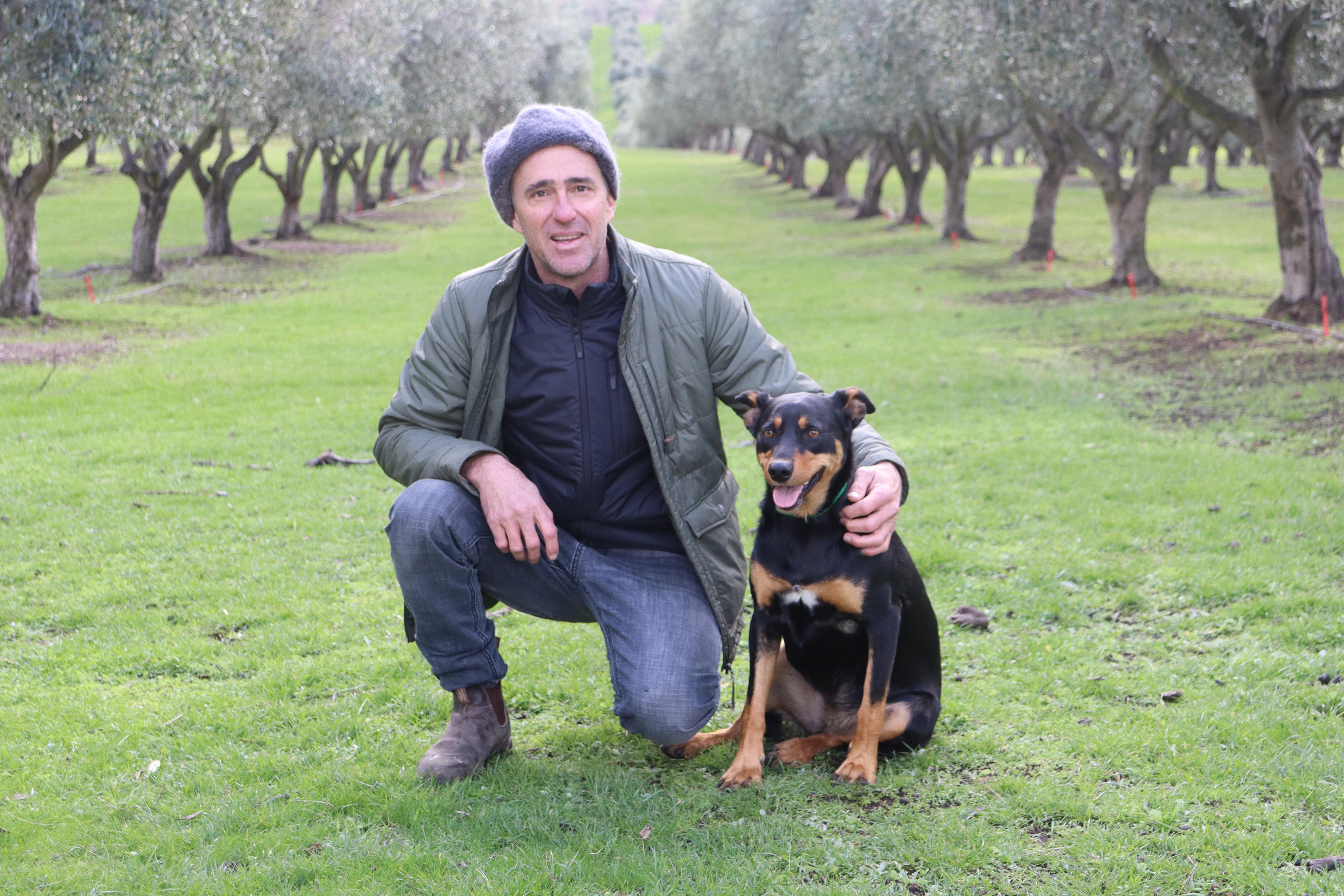
While Tasmanian Olive Groves at Colebrook is the state’s largest olive grove, it remains a one-man operation.
Grower Chris Dick brings in outside help when the trees need to be pruned, but when it is time to pick the fruit, he is on his own – using a special olive harvester.
Attached to a vehicle similar to an all-terrain four-wheeler, he has a machine that shakes the trees, and the olives are caught in what is akin to a large, upside down umbrella.
Mr Dick said it is the only machine of its kind in the state.
Tasmanian Olive Groves first planted trees at its property near Colebrook in 1996, with Mr Dick estimating there are now 12,000 to 13,000 trees.
“As far as I know, it’s the biggest I know by threefold.”
It is hard work for Mr Dick as the only person harvesting the olives.
“On a good day, I’ll harvest 12 bins of olives – which is about five to six tonnes of fruit.
“That equates to more than 1000 litres of olive oil a day.”
All of the fruit from Tasmanian Olive Groves ends up being used for oil.
“We don’t do table olives because it’s too much stuffing around to get right,” Mr Dick said. “But we don’t need to do that because we’ve got so much volume of olive oil.”
Most of Tasmanian Olive Groves’ oil ends up in restaurants and boutique stores, with products also available to purchase online.
“What gives me the most satisfaction is the end product,” Mr Dick said.
“It’s all about the oil.”
Mr Dick said he estimated that about 95 per cent of their operations would be classed as organic.
However, he said Tasmanian Olive Groves is not organically certified because it is not 100 per cent organic.
“I’ve used weed control once under the trees in the last four years.
“But our insect control and other stuff we use is all organically certified.
“We don’t use any nasty fertiliser sprays under the trees.”
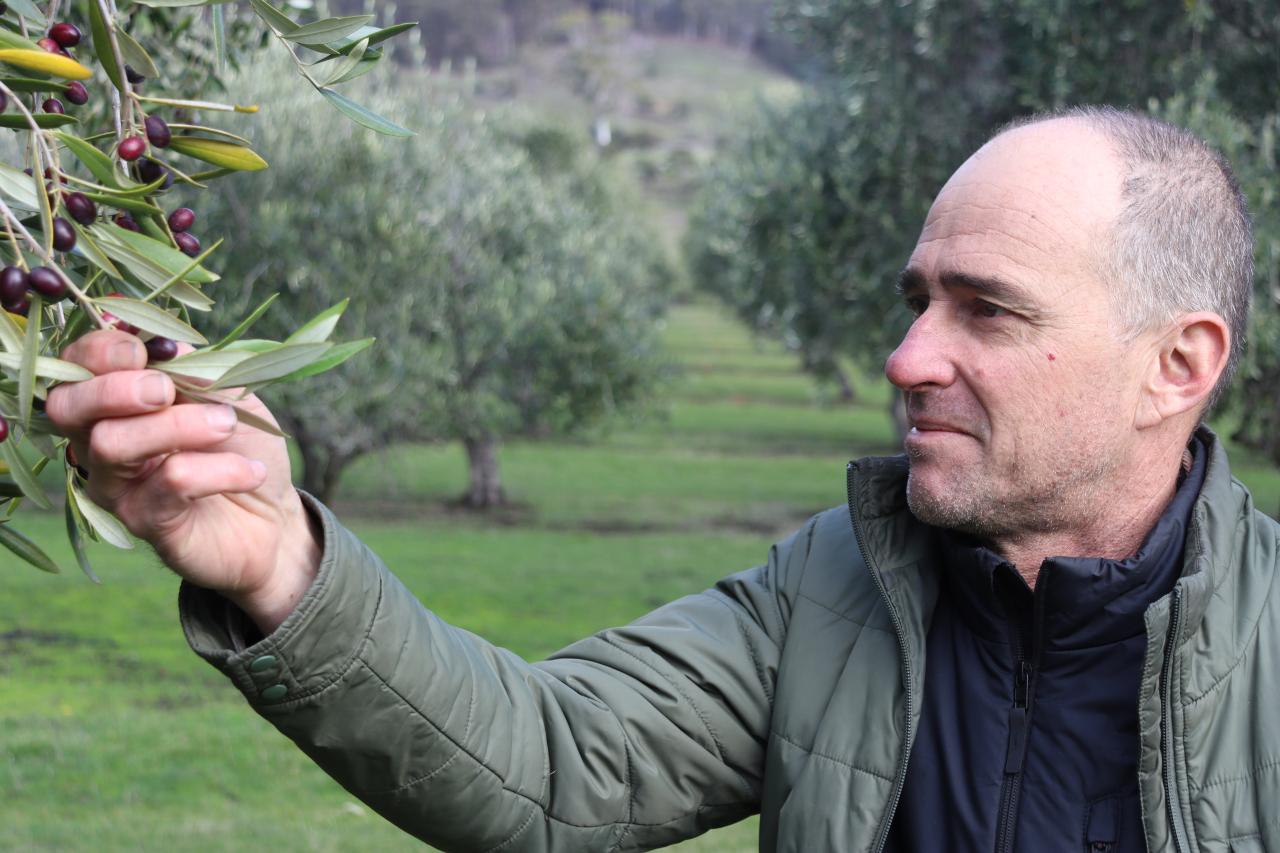
Mr Dick said Tasmania’s olive industry was small and boutique.
“The financial return is smaller,” he said. “To buy a mechanical harvester is about $350,000 brand new, so you’re not going to plant 1000 olive trees and go and buy one because the economics don’t stack up.
“And you can’t contract the harvester out because the smaller groves don’t have enough space between the trees to use it.”
Another challenge for Tasmanian Olive Groves was the threat of insects.
“We planted another 300 trees last year, but the grasshoppers decided to eat some of the seeds, Mr Dick said.
“We did manage to salvage some of them.
“You can’t win with farming.”
Mr Dick said he was planning to plant another 200 to 300 trees this year.
“The most important thing we have going for us in Tasmania is our cold climate and higher polyphenol levels in the olives.
“I think that makes it a superior product and people should be buying more local.”
Compared to what is sold at supermarkets, Mr Dick said, olive oil made by boutique and specialist producers was not much more expensive.
“Pricewise, it’s about 20 per cent dearer, and you’re getting a superior quality oil,” he said.
Fruit harvested at Tasmanian Olive Groves is sent to a facility at Moonah where it is turned into oil.
The olives are washed before they go into a hammer mill, where they are mulched and then spun in a malaxer.
After that, the olive oil comes out and goes through a separator before it is put into vats to mature and settle.
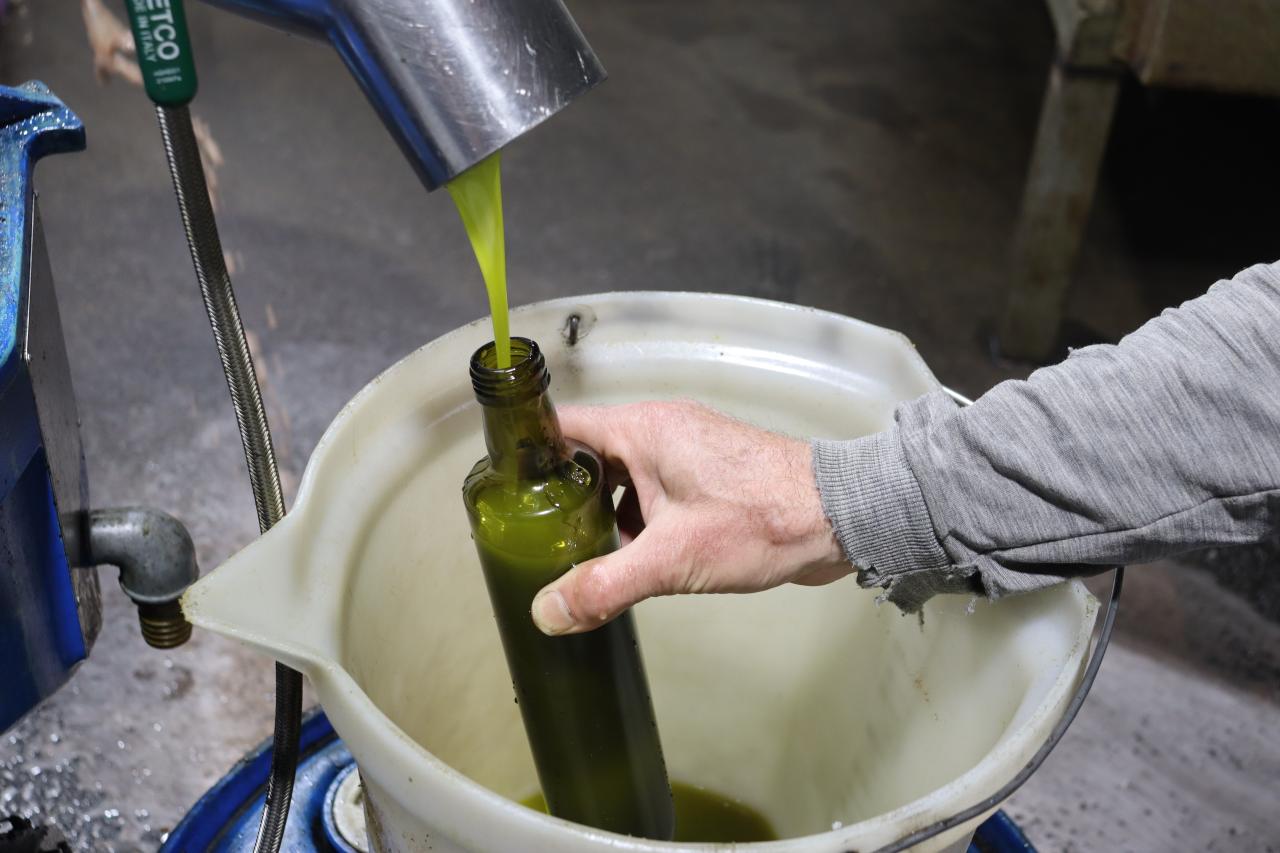
The final step is putting the oil into bottles and casks before being sold.
Chris Dick said no part of the fruit is wasted.
“The bits that aren’t used in the oil come back to the grove and are used as compost that gets spread back onto the olive grove.”
Tasmanian Olive Groves only sells extra virgin oil, which is unrefined and produced solely through cold-press extraction.
“The world health guidelines on extra virgin olive oil are that the polyphenol count has to be more than 250,” Mr Dick said.
“We’re getting a 600 count.”
Polyphenols are natural plant compounds that act as antioxidants.
“We’re trying to do early harvests to increase the polyphenol count, but that was hard this year,” Mr Dick said.
“We want to get the count up to 700 or 800.”
Mr Dick said Tasmania’s climate and late harvesting season were key to the high polyphenol count.
“I’m still harvesting at the end of July, and if it was a good year, I’d be harvesting for another six weeks,” he said.
“Different varieties have different stages.
“You need to have that sweet spot when picking.
“If you pick them too late, you might get more oil, but the quality might not be as good.”




Add new comment