
Tassie craft brewers seek Lion’s share
When Lion announced that it would close the 145-year-old James Boags Brewery in Launceston, alarm bells rang.
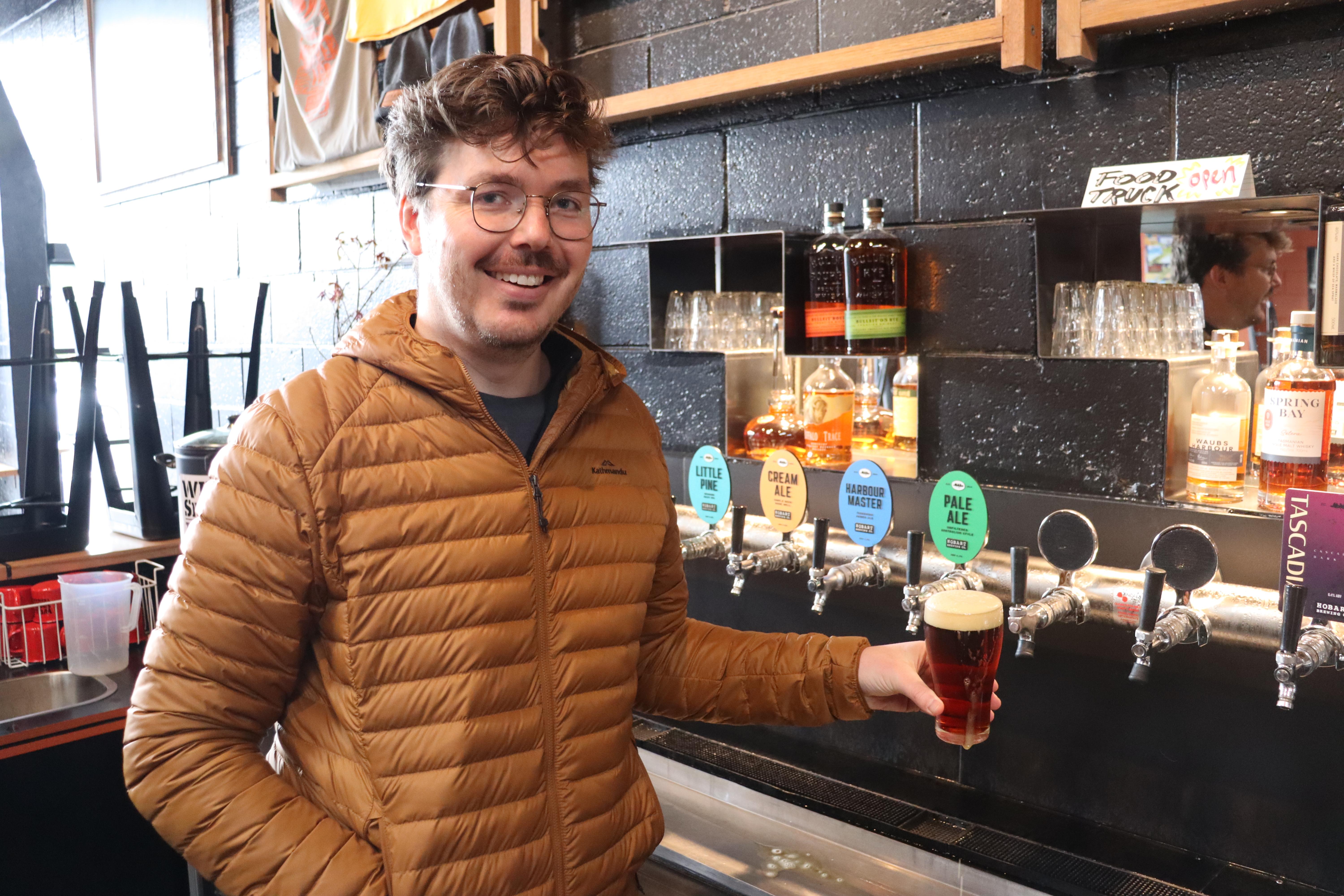
But Hobart Brewing Co marketing manager and licensee Nick Devereux said the closure could provide an opportunity for other beer producers in Tasmania.
“It’ll be really interesting to see if there is any sort of public preference in Tasmania to go more independent,” Mr Devereux said.
“There are some great breweries in Launceston making equally as terrific beer as us.
“It’ll be interesting to see if people stop drinking Boags.”
The brand will continue to operate, but its beers will be produced on the mainland.
That leaves Cascade as the biggest brewer in Tasmania, but there are more than 20 beer producers in the state.
HBC is one of those. It recently relocated from Macquarie Point to Argyle Street in North Hobart after being based at Macquarie Point for more than a decade.
Mr Devereux said that compared to other brewers in the state they were “medium to large”.
“When we started, there was a lot of hunger around for new craft breweries because craft brews were not widely accessible,” he said.
“We were part of that first wave of new Tasmanian breweries.
“When we first started, it was at a much smaller volume, but people were making lots of different stuff.”
These days, Mr Devereux said that HBC was aiming to be an alternative to larger, commercial brewers.
“We make a lot of pale and lager – things that are potentially easier to drink.
“People these days seem to use us for quality over quantity but without having to break the bank.
“I feel as though the brewers doing craft beer are concentrating more on affordable, core-range beers – not the crazy stuff.”
Mr Devereux said HBC sold virtually all its beer in Tasmania.
“Growing as a Tasmanian brewery is hard because if you want to sell beer outside of Tasmania, freight is tricky,” he said.
“It’s rough trying to get your beer into new markets.”
HBC gets its hops from Bushy Park Estates in the Derwent Valley area.
“We make a big effort to make sure that Tassie hops are represented in what we do.”
Bushy Park Estates is owned by Hop Products Australia (HPA), which covers about 160ha and can produce more than 3000 tonnes of hops in a good season.
HPA chief marketing officer Grace Irwin said hops are a relatively small agricultural industry in Tasmania in terms of acreage, but it is one of the most historically significant hop-growing regions in Australia.
“Cultivation is concentrated in the Derwent Valley, where Bushy Park is one of the oldest continuously operating hop-growing regions in the country,” Ms Irwin said.
“This region has been producing hops for well over a century, and it carries a legacy of agronomic expertise and ideal conditions.”
HPA is the biggest player in the Tasmanian hop game, but there are other boutique hop producers in the state.
“This mix of larger-scale and specialty producers strengthens Tasmania’s overall reputation and ensures brewers continue to look to the state as a serious source of quality hops,” Ms Irwin said.
“HPA has also worked with independent growers over the years where it makes sense, including growing particular varieties to help meet brewer demand.”
Ms Irwin said Bushy Park Estates represents about 30 per cent of HPA’s operations, with the rest in Victoria.
“Our Tasmanian farm continues to serve as a foundational site for the company, where we’re combining a rich history with a modern approach to agriculture.
“There’s a huge amount of technology and science involved in what can sometimes look like a traditional crop.
“We have breeding and agronomy programs, sophisticated irrigation and farm management systems, and we’re increasingly looking at automation to improve productivity and make the operation more efficient.”
The Tasmanian hop harvest takes place in March.
“We harvest a range of varieties in Tasmania, including Galaxy, which helped establish Australia’s reputation for high-quality aroma hops internationally,” Ms Irwin said.
HPA supplies major brewers and a substantial number of craft breweries, and imports hops to the US, Canada, Europe, and parts of Asia.
“The hop industry has been through a period of global oversupply, so the last few years have been about getting the balance right between supply and demand,” he said.
“We’ve strategically reduced production rather than simply chasing volume, and that’s allowed us to focus on the health of our farms and the quality of the crop.”
Ms Irwin said the Tasmanian hop industry punched above its weight.
“The industry might be relatively small in size, but the opportunity is much bigger than the number of hectares would suggest.”
Tasmania sold about 24,000 tonnes of barley in 2024-25, down slightly from 25,000 tonnes in each of the previous two years. Not all of that was malting barley and not all Tasmanian beer is brewed exclusively from Tasmanian grain.




Add new comment