
Wheat crop fire raises questions on volunteer compliance
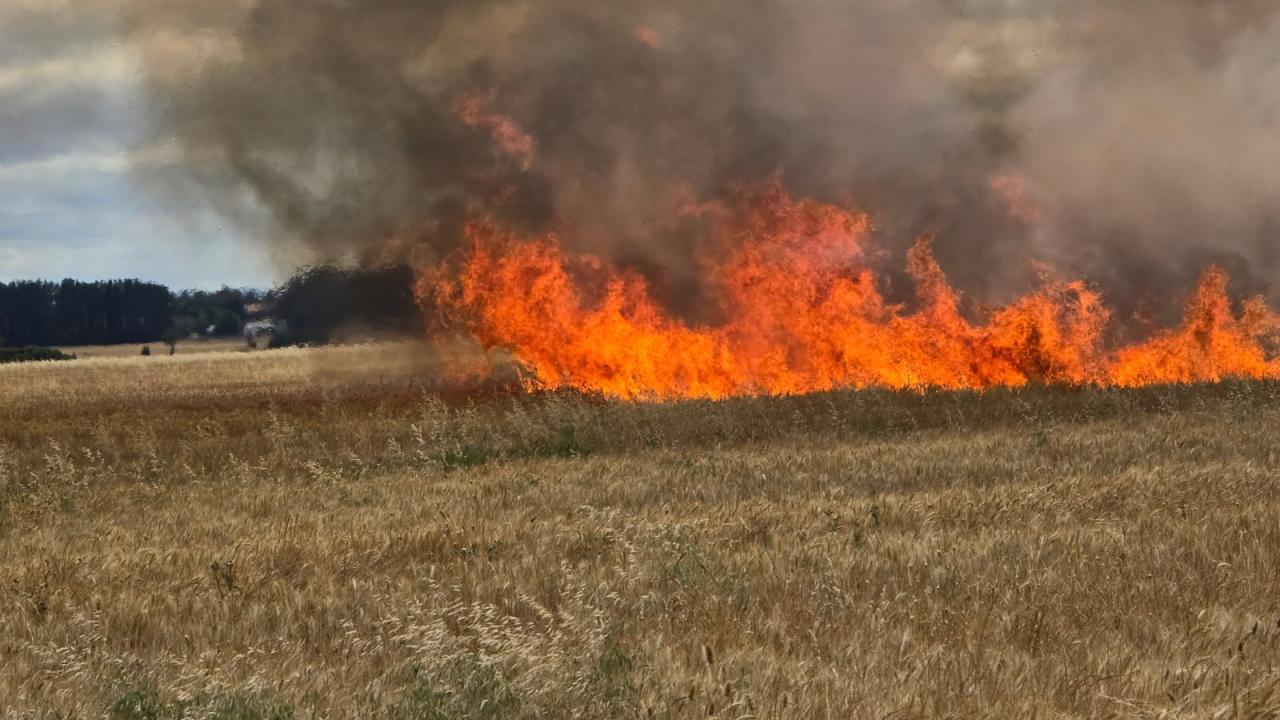
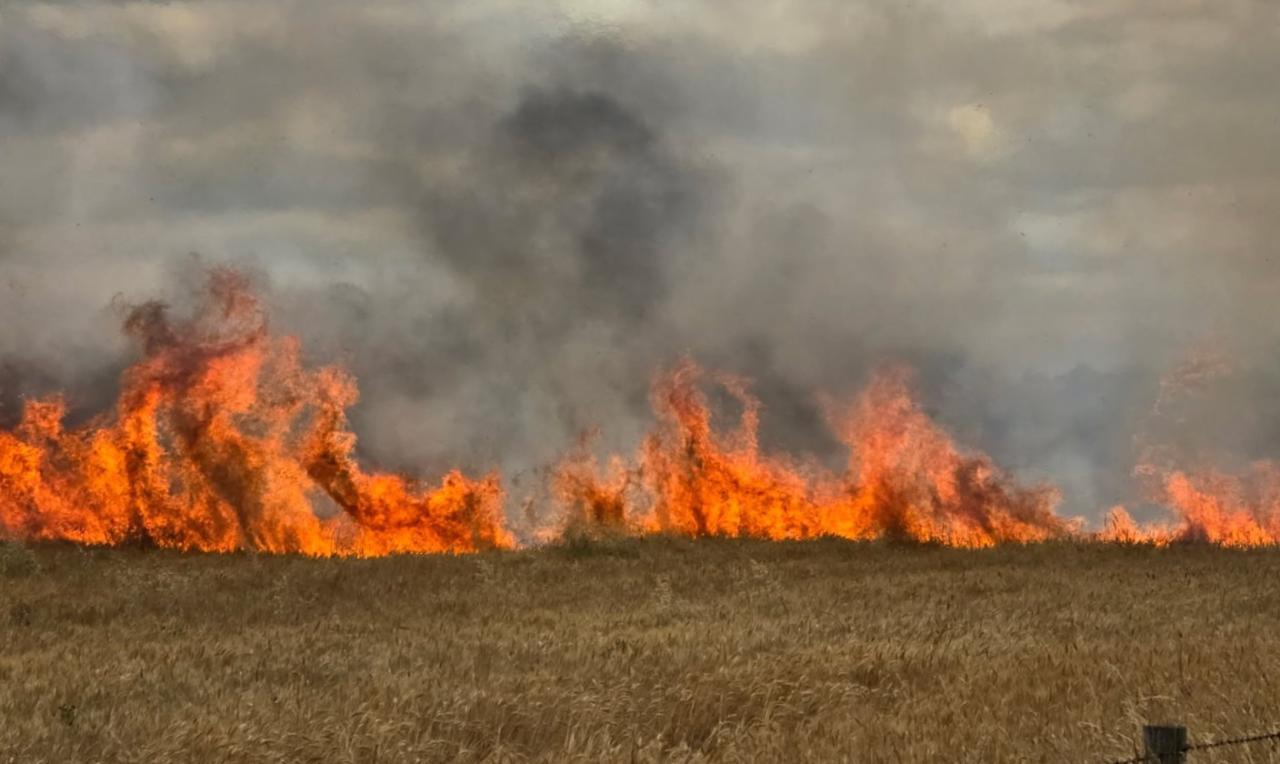
A fire on farmland between Bracknell and Bishopsbourne on Sunday destroyed a paddock of wheat, threatened a horse agistment property and put some volunteer fire fighters in a moral dilemma.
Up until today 373 TFS volunteers have been directed to stay away from their brigade until they complete two new modules of training, however two of the non-compliant volunteers did not hesitate to rush to the fire scene.
Simon Rootes received a call from a friend to say an old gum tree had fallen across Green Rises Road, which accesses his home and Kilburn Lodge Equine Agistment, and that it had taken down power lines and was “smoking”.
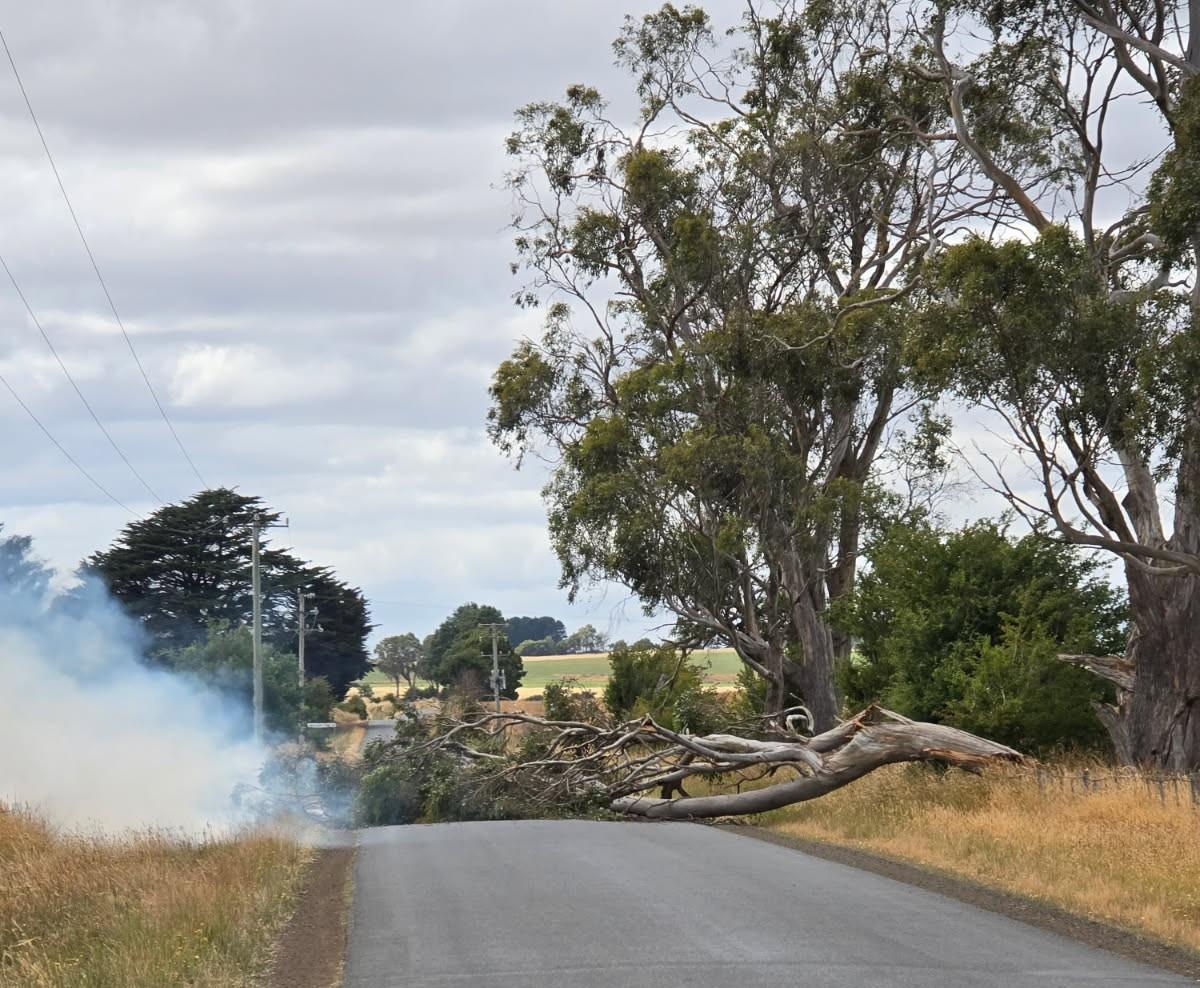
He rushed along to have a look just as the wheat on the opposite side of the road to the tree caught fire - and he called 000.
“I had been in a shed at home and the power went off, then 30 seconds later it came back on, so I didn’t think too much of it,” Simon said.
“But when I was alerted to the tree being down and saw that it had started a fire, I made the emergency call and then rang my friends in the local Bishopsbourne Fire Brigade and they were first on the scene.
“In the 30 seconds after I called it in the fire had moved 20m and was gaining momentum.
“It was heading towards Bishopsbourne and my property so while I knew it probably wouldn’t reach as far as my house I was worried about the horses.
“Luckily there were two of our main agistees on site and they were able to cut up the fallen tree to help with access and move the 18 horses to the other side of the property.”
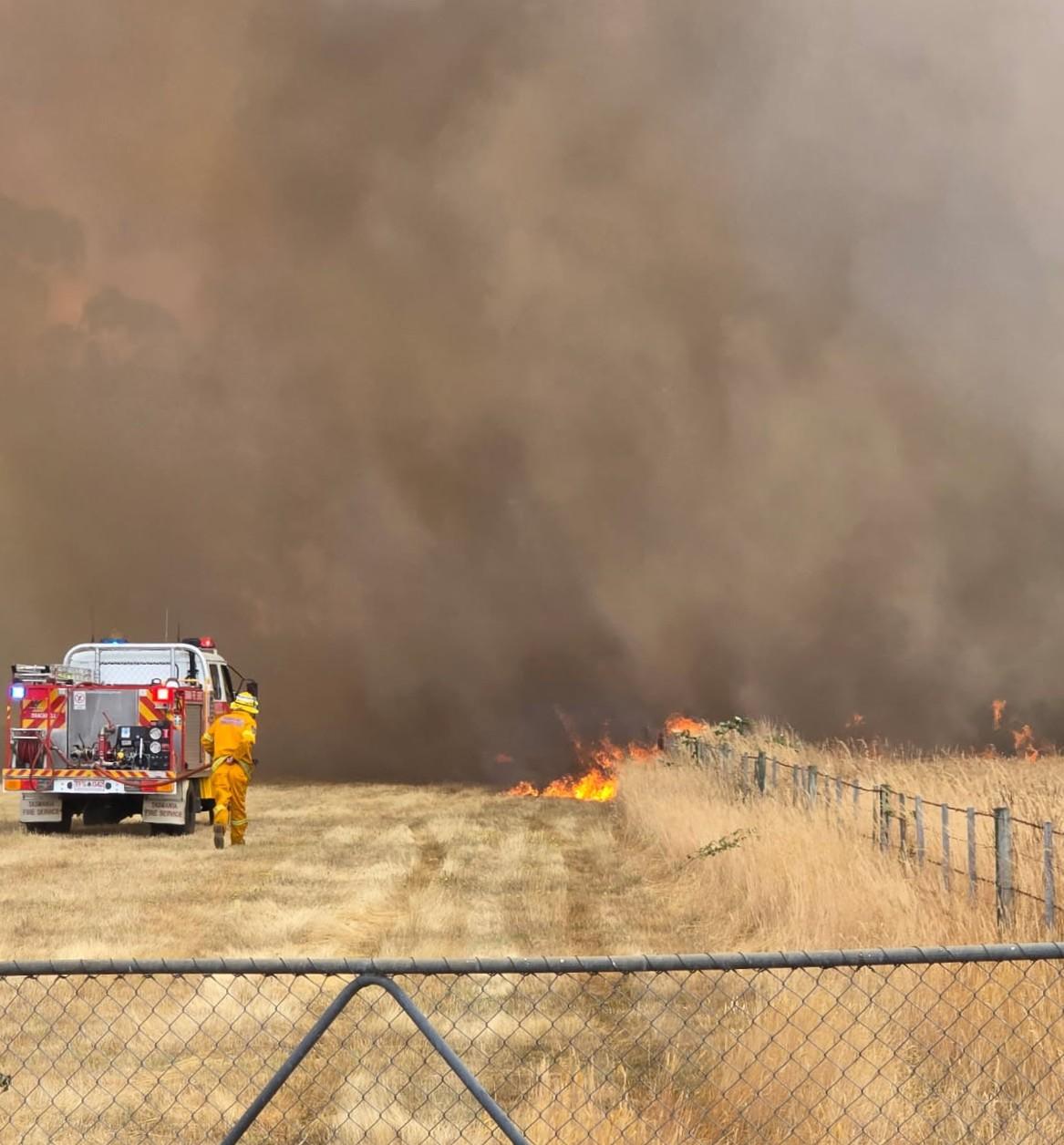 The fire took hold in the neighbour’s wheat field, due to be harvested this week, quickly spreading despite no winds.
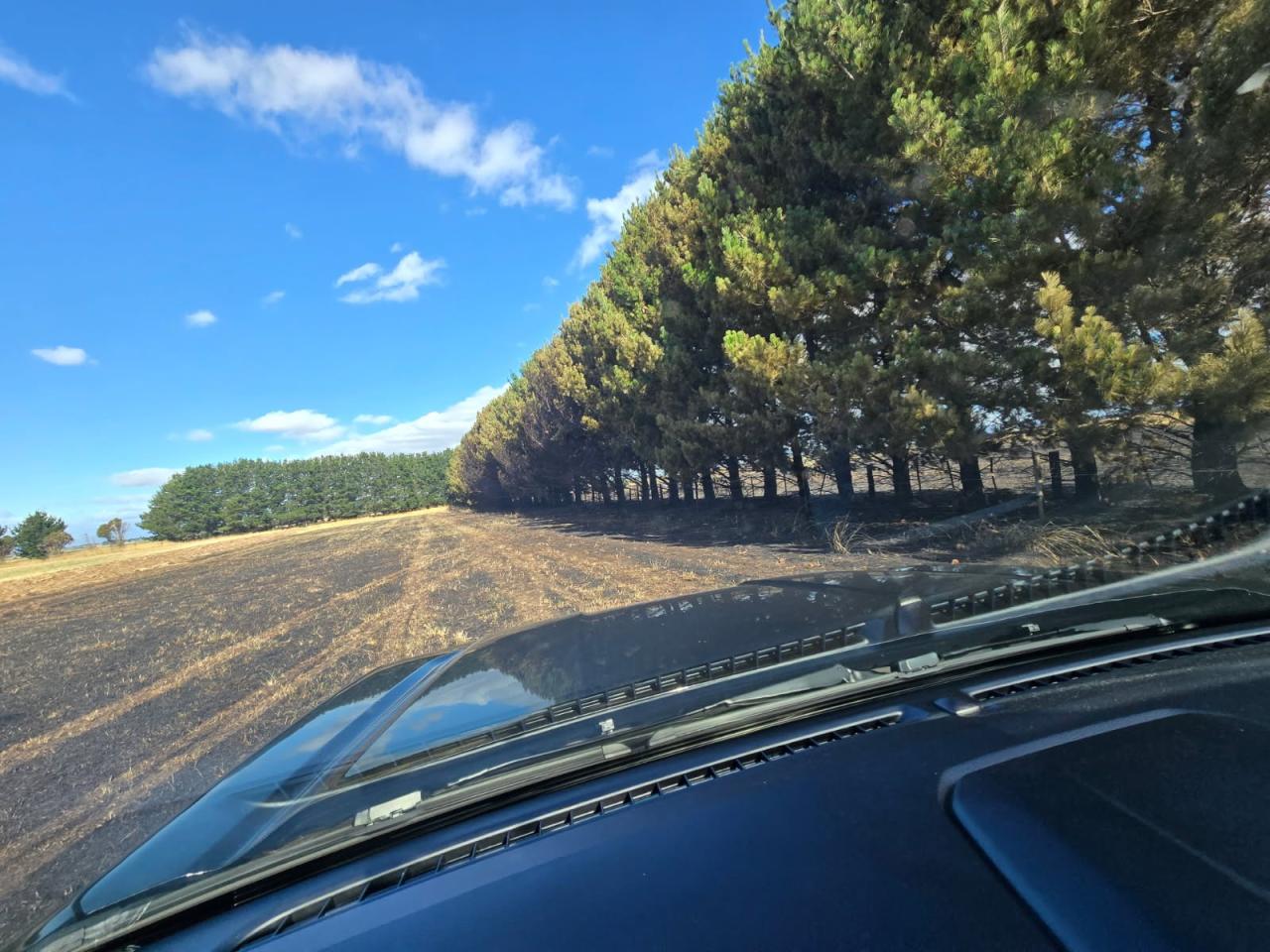
The local fire brigade and extra units from Launceston were unable to contain the fire and three water-bombing helicopters were required, accessing water from nearby dams to douse the 3-4m high flames which had made it into a row of pine trees.
By the time the fire was under control the fire had torched the paddock and a linear irrigator.
The wheat crop, at Winterbrook farm, is owned by Rick Elias, who also leases Glaslow at Epping.
He said he feels lucky that only 12ha was lost from a 180ha crop of wheat.
“I was loading grain into silos at the time and by the time I heard about the fire and arrived on site there with a tractor and discs there was already three or four farmers there with tractors and tankers and the fire brigade, but those choppers did a good job putting it out – especially when it got into the pine trees.
“We’re currently harvesting at Epping and we have a tractor and discs plus a fire truck down there in case of fire – the last thing we expected was one at home.”
After the wheat harvest Rick said there is a market for the straw and then he usually tries to burn the stubble.
“If the wind had been up and the choppers had to go any further away for water I reckon the next 50ha would have burned and then after that it could have got to the house, 1000 bales of hay and then the next lot of wheat.
The two first responders, attributed with slowing the spread of the fire until further resources were available, are likely to be stood down by the Tasmanian Fire Service this week for not completing a Working with Vulnerable People online training course.
Despite obtaining their Working with Vulnerable People card, the extra online course is now mandatory.
Those who haven’t completed the course have been threatened with dismissal and it is believed that correspondence to that effect is due to be sent out this week.
“If they hadn’t turned up things could have been different – lives could have been put in danger and livelihoods lost,” Simon said.
“I was a part of the Deloraine Football Club for eight years and I’m aware of why these checks are needed but why the department would be willing to let volunteers go over it I don’t understand.
“These are volunteers, often they’re farmers themselves, they give so much already, and now they’re technically not allowed to help fight a fire – that’s madness.”
There is a fear that some brigades will lose members who are unwilling or unable to do the training and while those numbers are likely to be low, any weakening of local firefighting capacity would be hard felt by rural communities.
Great Lakes Fire Brigade chief Colin Triffitt said that he, like many volunteers, were dubious about the need for the online training.
“We were given the option of doing the two modules as individuals or in a group setting, so we brought all of our brigades together and got it over and done with in one block in a couple of hours,” he said.
“I understand the frustration, but it wasn’t hard and we have a better understanding of situations where it might be handy.
“Volunteers were warned they had until May, with a leadup of probably 18 months, to have the training complete or their services might not be required.
“If not completed they are to stay away from brigade activities until they do.
“We had seven non-compliant, but some of those had done the course but paperwork was lost. We lost one person due to illness, one decided to leave the brigade and one has yet to do the training.”
Following the Commission of Inquiry, the Child and Youth Safe Organisations Act 2023 came into effect for all Tasmanian Government agencies, including DPFEM, from January 1, 2024.
As a result, all DPFEM workers (including all TFS and SES volunteers ages 18 and above) must complete two mandatory training modules - DPFEM Keeping Children Safe Module 1, and DPFEM Keeping Children Safe Module 2: Reportable Conduct.
A department spokesperson said it takes approximately less than two hours for participants to complete both modules.
"These are important training modules which outline the processes for reporting and the importance of keeping our children and young people safe.
"All DPFEM workers were required to complete both modules of the mandatory training by Friday, May 30, 2025.
"The vast majority of TFS personnel completed the training by the cut-off date.
"There are currently 373 TFS volunteers (as of Monday, January 12) who have been directed to stay away from their brigade until they complete both modules of the training.
"A significant number of these are Social Members or Operational Support (not directly involved in frontline fire activities).
"Once these members have completed both modules, they will be automatically reinstated and can return to normal membership activities.
"To date, no TFS volunteer has had their volunteer membership terminated."
Support was made available for all members to help them undertake the mandatory training by the original cut-off date, and this support remains.
Tasmania has around 5000 volunteer firefighters serving across more than 200 fire brigades statewide as part of the Tasmania Fire Service (TFS).




Add new comment
Comments
Amount of Volunteer Fire Fighters
Hi I was wondering where the figures on Fire Fighter numbers came from?
Through the research myself and a few other Fire Fighters have done it appears to be closer to 1800 active.
Information is from the TFS…
Information is from the TFS website, however it doesn't break down active and inactive. The training applies to all. Some of those who are non-compliant are likely inactive members but happy to get an update. - Editor
Shit government and Red tape
If the authorities put more time and effort into maintaining the road verges and not trying to keep the minority groups happy this would not happen. Not that long ago a farmer just north of Epping Forest lost a lot of fencing due to the road verges not being maintained.
My thoughts exactly Glen we…
My thoughts exactly Glen we have 3 foot high dry grass on our road verges!!! Remind me what we’re paying our rates for??