
Steve Martin brings horticulture wisdom to Tasmania
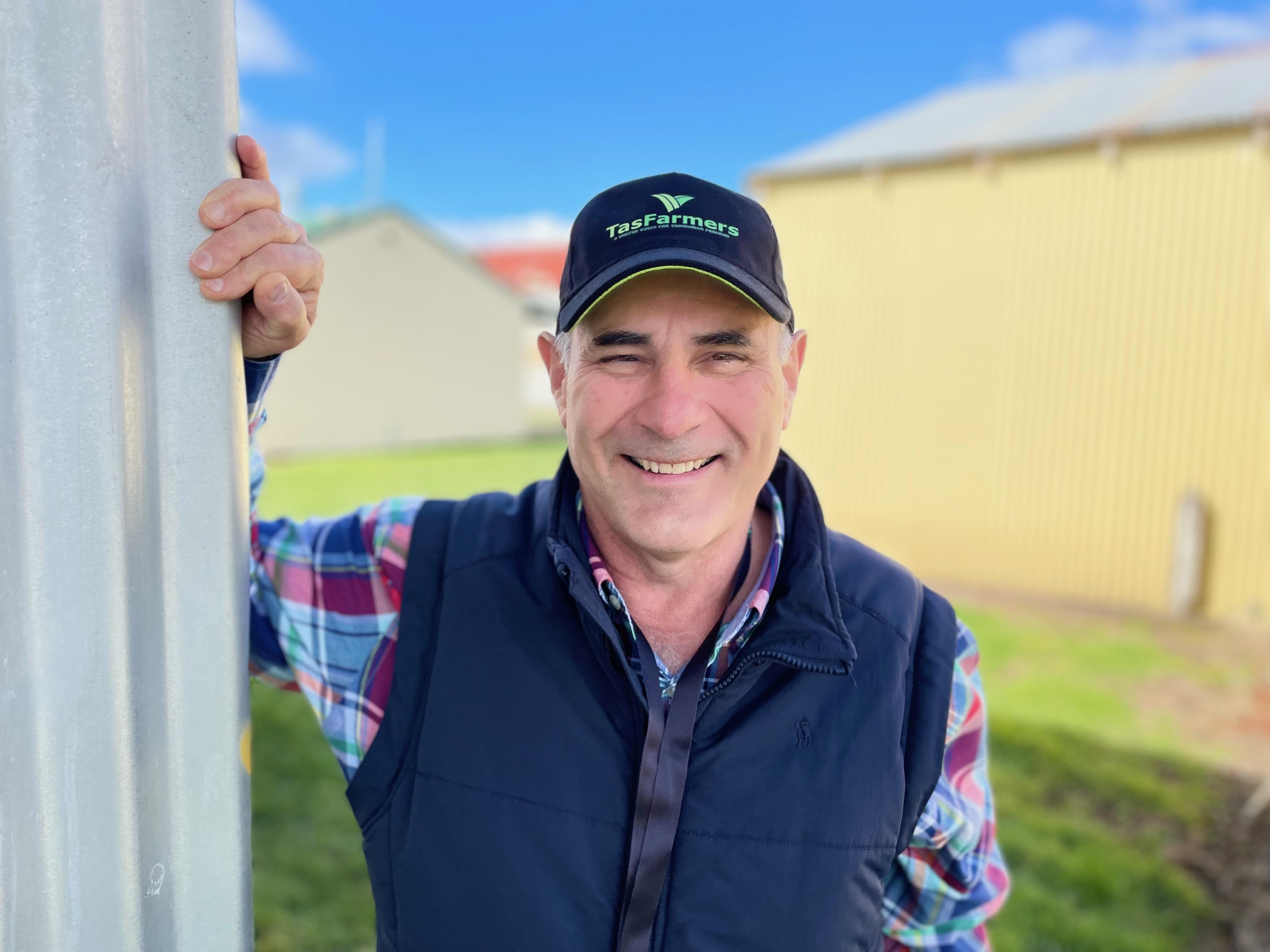
STEVE Martin travelled from Balbari, Queensland, to experience FarmX and talk to farmers as a man who had learned a thing or two about horticulture from personal experience.
He had once farmed in the Atherton Tablelands, converting the property from growing tobacco to vegetables – organic avocados, lemons, limes, passionfruit, zucchinis, pumpkins, capsicums and pomelos.
Unfortunately, nearby wind farms created havoc with his orchards, and he eventually left the business and went to work for Melgowie Farming Company, one of Australia’s largest family-owned horticultural businesses.
Eventually, he branched out on his own within the regenerative agriculture space and he spends his time practising, teaching and implementing regenerative practices to ultimately “create food that acts as our medicine”.
“I was invited here by two lovely ladies from VEGNET named Prue and Taylor who actually came through Melgowie last year on a tour and I’ve been in Tasmania for a week talking to farmers, mainly around Devonport, as well as some of my own clients about regenerative farming,” Mr Martin said.
“My aim is to help farmers become more profitable in the farming landscape and understand the ‘whys’ behind what they do.
“Why should we sustain something that is not currently sustainable? Why just put a pesticide on a problem and say it’s fixed?
“In my education pathway with farmers, it is all about understanding that while soil health is important, plant health is what actually drives soil health.”
Steve told the FarmX audience that the root of a healthy profit is healthy plants and that soil health is the beneficial consequence.
“I think a lot of farmers take things for granted when issues arise,” he said.
“A company or salesperson might say that spraying a specific product will fix the problem, but then the problem returns.
The key message for anyone within the industry is to ask questions and understand why a pest is a pest or why a disease is a disease, so you can find the root cause.
“Unfortunately, the prices of petrol, diesel and fertilisers are all going up, while the prices we receive from wholesalers and markets are going down.
“Because of this our break-even points are coming together very quickly so the less inputs one has to pay for the better.”
One of the examples Steve gave came from a question about a slug problem.
He said that when you go to a shop the best pest control for slugs always involves copper.
“So we have to ask why don’t we ensure higher copper levels in our crops to deter the slugs from eating them in the first place – because they won’t eat something with high levels of soluble copper,” he said.
“The issue is that we use a whole lot of nitrates in our cropping systems, and nitrates actively antagonise copper.
“By doing this, the farmer has accidentally created the problem and finding more slugs is nature’s way of telling the farmer that a problem has been created.
“Buying very expensive chemical granules to spread out might kill the immediate slugs but it won’t kill the underlying problem.”
Steve said visits to Tasmanian farms that grow apples, potatoes, onions, beets and many other crops had been mutually beneficial.


Add new comment