
TasPorts annual report skims King Island
TasPorts’ 2024–25 Annual Report gives a broad account of port operations across Tasmania, but King Island – one of the state’s most freight-dependent and supply-vulnerable communities – receives only limited and often incomplete information. While headline figures are included, much of the detail needed to understand the island’s freight security, port condition, cost pressures and long-term planning is either minimal or absent. For a Government Business Enterprise responsible for critical infrastructure, transparency is especially important for isolated communities like King Island.
The report confirms that King Island handled 83,520 tonnes of freight, 7,955 TEU and recorded 156 vessel visits, with fuels and general cargo listed as key commodities. However, unlike larger TasPorts ports, no breakdown is provided. The report does not include any operational performance data - delays, cancellations or disruptions, which actually matter to the island. There is no detail about livestock volumes, fuel tonnage, food imports, fertiliser, building materials, machinery or retail freight. The report also notes a 16.8 per cent decline in tonnage but offers no explanation of what drove the fall, whether it relates to industry cycles, changes in transport providers, pricing effects or reduced demand.
This narrative also contradicts other information in the report. TasPorts acknowledges that two government-underwritten sailings were provided during the severe 2024 drought to evacuate livestock and transport fodder – movements that would normally increase freight activity. Yet none of this is quantified. The decline is instead attributed solely to “reduced cargo demand”, leaving an unclear and inconsistent picture of what actually occurred.
Further complicating interpretation is the fact that TasPorts publishes two different sets of freight numbers for King Island – one in the BIL financial summary and another in the statewide trade snapshot. The figures do not reconcile, and the report provides no explanation for this discrepancy.
Bass Island Line (BIL), the TasPorts-owned subsidiary that operates the John Duigan, again posted a financial loss – $762,000 this year. TasPorts attributes this to the temporary suspension of service following a bollard failure at Grassy, higher crewing costs and reduced volumes. But the report provides no detail on any of these factors: no cost of chartering a replacement vessel, no breakdown of repair expenses, no assessment of the crewing model change and no explanation of how each element contributed to the loss. The John Duigan itself receives minimal mention, with no reporting on its maintenance program, reliability, operating performance or future replacement planning, despite its central role in the island’s freight chain. While Eastern Line Shipping also services the island, BIL is the regulated provider of essential freight movements.
Adding to this, the financial performance section explicitly excludes BIL from TasPorts’ whole-of-business analysis. Key metrics such as profitability, return on assets and cost efficiency therefore do not include King Island’s only government-backed shipping service. For a taxpayer owned monopoly, this exclusion raises clear questions about visibility and accountability.
The report also confirms that BIL had been subsidising the Devonport–Melbourne transhipment model introduced in 2022, but that this support has now been “gradually reduced”. No figures or timelines are given, and TasPorts does not explain whether removing the subsidy increased freight costs for King Island customers or contributed to the decline in cargo volumes
The financial relationship between TasPorts and BIL makes it even less clear how freight costs are being calculated. TasPorts earns more than $2.26 million in fees from BIL, including wharfage, stevedoring, tonnage charges and infrastructure levies. BIL, in turn, charges TasPorts more than $630,000 for freight services and surcharges. This internal charging structure is not explained, nor is it clear whether these charges reflect actual operating costs or influence prices paid by King Island customers. With no methodology or comparison to other ports, it is difficult to assess whether BIL’s losses are structural, operational or or simply the result of the way TasPorts accounts for its own internal charges.
Fuel is one of King Island’s most strategically important lifeline commodities, and TasPorts lists “fuel distribution at Hobart, King Island and Flinders Island” as a principal activity. Yet the annual report provides almost no reporting on this business. There is no fuel tonnage, no revenue or expenditure detail, no port-level data, no information on storage or handling infrastructure and no assessment of supply resilience, risk or contingency planning. Apart from a single line acknowledging the fuel distribution business and a generic revenue-recognition note, the report offers no insight into how TasPorts manages or performs this essential function. For an island dependent on reliable fuel supplies across agriculture, transport, emergency services and everyday life, this lack of reporting is a significant gap.
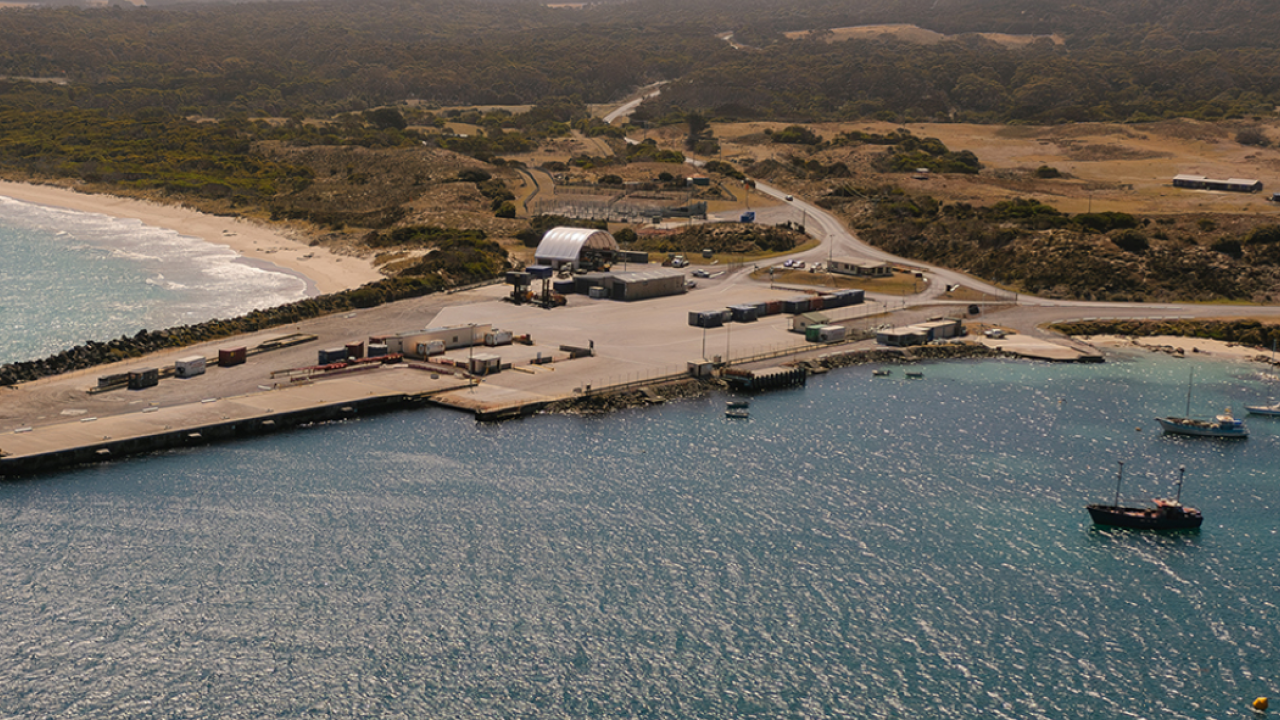
Infrastructure reporting for the Port of Grassy is similarly limited. TasPorts notes that a RORO ramp resurfacing, pile wrapping and bollard upgrades were completed during the year, but provides no costings, timelines, engineering context or assessment of remaining infrastructure needs. Grassy is a public port, yet it receives far less reporting than major Tasmanian ports. The long-awaited Port of Grassy Feasibility Study – completed in July 2025 and now with the Tasmanian Government – is mentioned only briefly. The report frames the review as something expected in a future financial year, despite the study already being finalised. While the decision to publish sits with government, TasPorts could have provided more context regarding its scope or implications for King Island.
The bollard failure that suspended BIL services is acknowledged in a single sentence, but the report offers no further detail about the extent of the failure, the cost of the charter vessel, safety assessments undertaken or whether other assets are compromised. For an island dependent on a single public freight port and a public freight service, the absence of this information is notable.
TasPorts discloses a rental payment of $54,362 to King Island Ports Corporation (KIPC), a wholly owned subsidiary holding several legacy King Island port assets, but provides no information on the condition, maintenance or long-term status of these assets. There is no depreciation detail or assessment of renewal needs, making it difficult to understand the sustainability of the infrastructure still under KIPC control.
TasPorts also spent almost $11.5 million on consultants during the year, covering engineering, strategy, environmental assessments and planning work. Yet no consultant activity is identified as relating to King Island, the Port of Grassy, the John Duigan, freight modelling, safety analysis or the feasibility study. This stands out in a year that involved a drought evacuation, a major infrastructure failure, a ship-management tender and ongoing questions about long-term freight routes and connectivity.
Across freight, infrastructure, financial reporting and strategic planning, the TasPorts annual report provides only a partial picture of King Island’s operational environment. For a community with no alternative sea freight corridor and only limited air freight capacity for perishables, the island remains highly exposed to supply interruptions, and the gaps in reporting make it harder to understand service performance, identify risks or anticipate future changes. As a publicly owned GBE responsible for essential supply lines, TasPorts carries an obligation to provide clear and complete reporting – especially for regions most dependent on its services. This year’s report leaves many of those questions unanswered for King Island.




Add new comment
Comments
Grassy Port
Perhaps Tasports too busy ducking for cover due to TT line fiasco
Tas Ports annual report
The two year drought highlighted the inadequacy of Sea Transport to King Island but nothing much has been changed to alleviate similar future problems.
There has been a report done .What are they hiding ?