
Water demand prompts irrigation extension
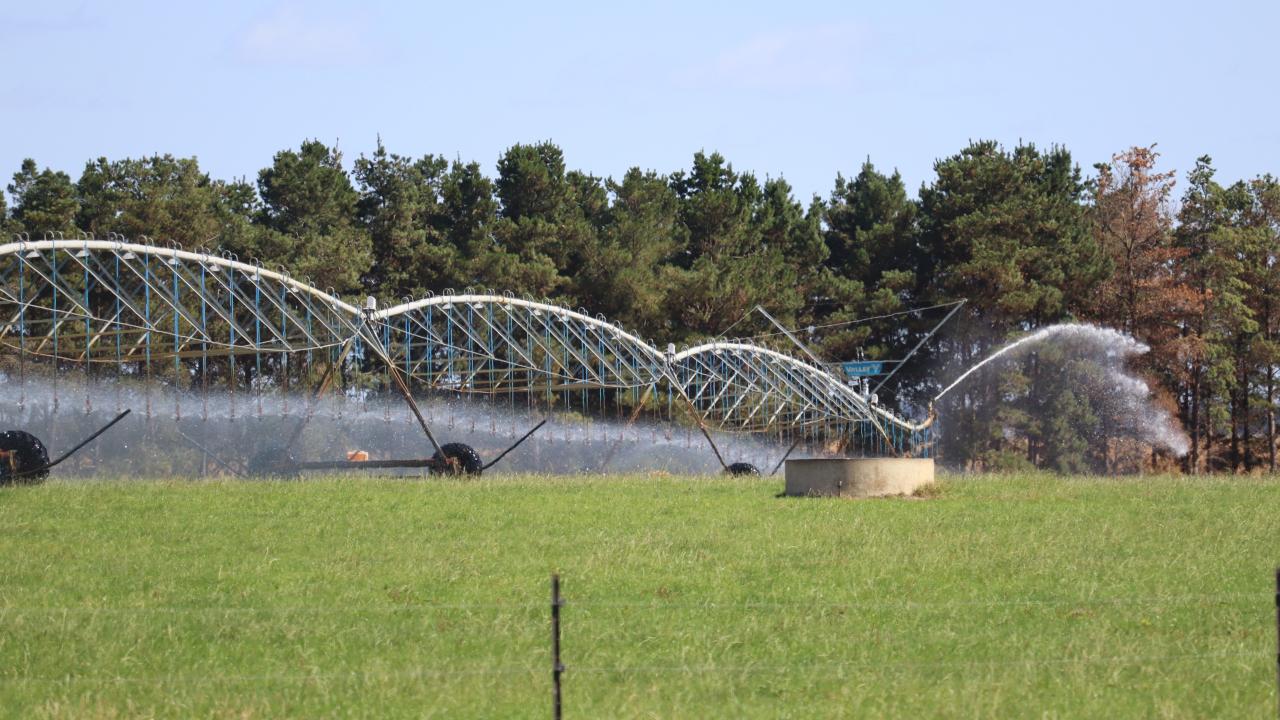
Tasmanian Irrigation has delivered the second highest volume of irrigation water in the organisation’s history, and extended irrigation seasons on nine of its operational schemes to meet the needs of farmers.
More than 85,200 megalitres of water was delivered to farmers to the end of March, including an all-time monthly delivery record of 24,349 megalitres in January and more than 19,320 megalitres was delivered in February, the third highest month on record.
This season’s water delivered to the end of March is only slightly behind 2023/24 (88,795 megalitres), and above 2024/25 (78,663 megalitres).
The closing date on almost half of Tasmanian Irrigation schemes has been extended, ensuring farmers can access much-needed highly-reliable water to finish late crops and maintain pasture productivity.
The schemes with the most significant extensions are the Southern Highlands Irrigation Scheme, the Swan Valley Irrigation Scheme (East Coast), the Winnaleah Irrigation Scheme and the Lower South Esk Irrigation Scheme.

Tasmanian Irrigation CEO Mike Sylvester said the latest seasonal outlook from the Bureau of Meteorology indicates rainfall across Tasmania is likely to be below average and temperatures above average for the months of April to June.
“The combination of reduced rainfall and elevated temperatures has meant a dry finish to the 2025/26 irrigation season across most of our irrigation districts,” Mr Sylvester said.
“With rising input cost pressures on fertiliser, fuel and chemicals, as well as fluctuating commodity prices, farmers are telling us that access to Tasmanian Irrigation water is as important as ever to sustain their agricultural businesses.
“We understand the pressures that our farmers are under and it’s great that we have been able to support our customers by extending the irrigation season, giving them peace of mind regarding reliable access to water.
“Our operational assets, such as pumps, balance tanks and pipelines have been tested like never before and it’s an absolute credit to our scheme operators and the entire Tasmanian Irrigation team that we continue to deliver water where and when it is needed.”
Schemes that received water delivery that was significantly above budget to the end of March include the Midlands, Whitemore, South East Stage One and Swan Valley schemes.
Despite the high levels of water delivery, most of Tasmanian Irrigation’s 23 dams have healthy levels of water.
However, Mr Sylvester said if the predicted shift toward El Niño by late winter this year occurred, a drier and warmer than average autumn with reduced natural catchment recharge could be likely.
“Tasmanian Irrigation will continue to monitor its dam levels and communicate with our customers to ensure our water delivery business is well placed for the 2026/27 season,” he said.




Add new comment