
It's a wrap for stylish Meg
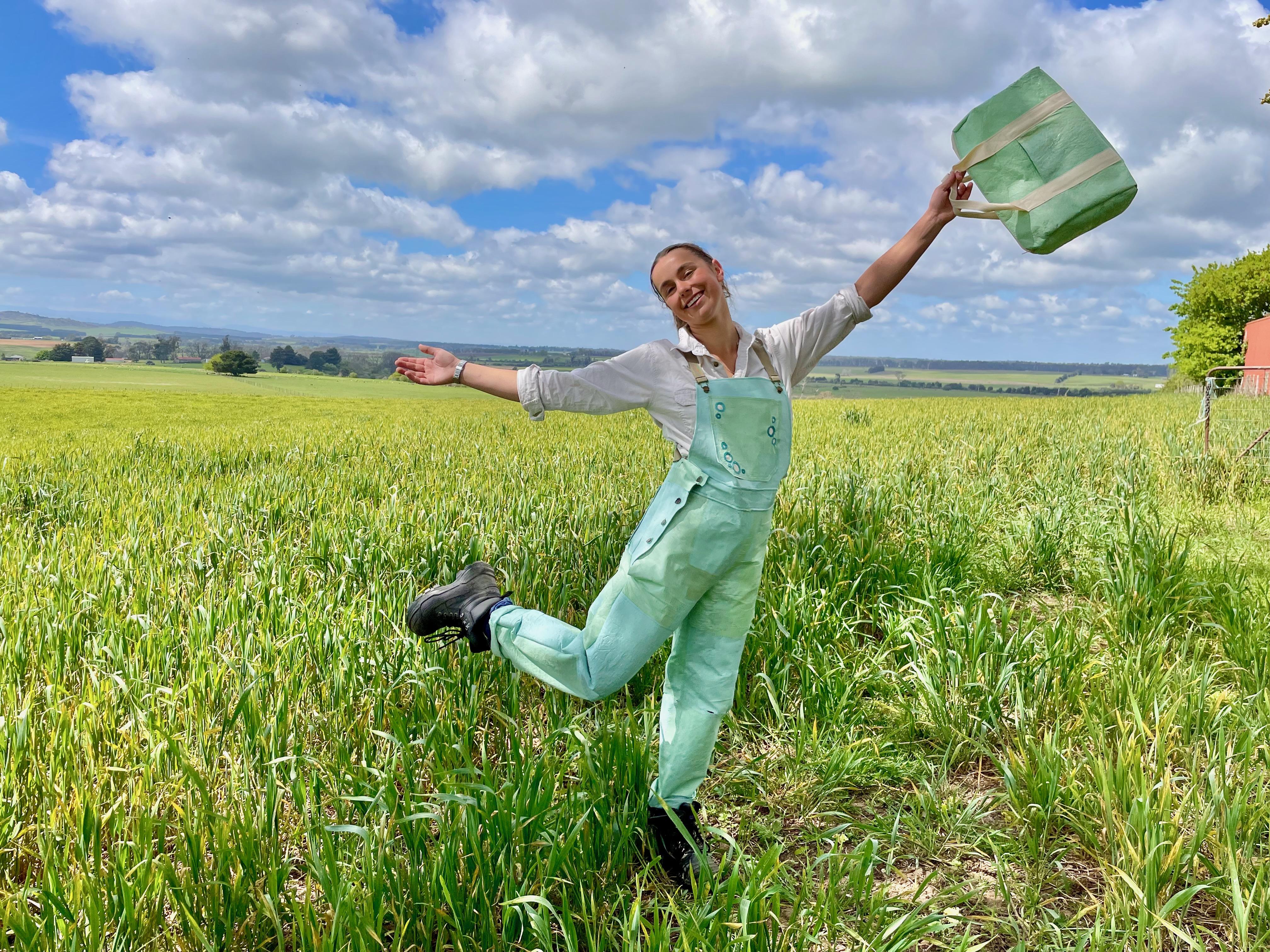
The scourge of silage wrap on farms and how to repurpose the plastic has been the inspiration behind Meg Kilby’s Object Design project which was on display last week at the University of Tasmania’s Lanter Gallery at Inveresk, Launceston.
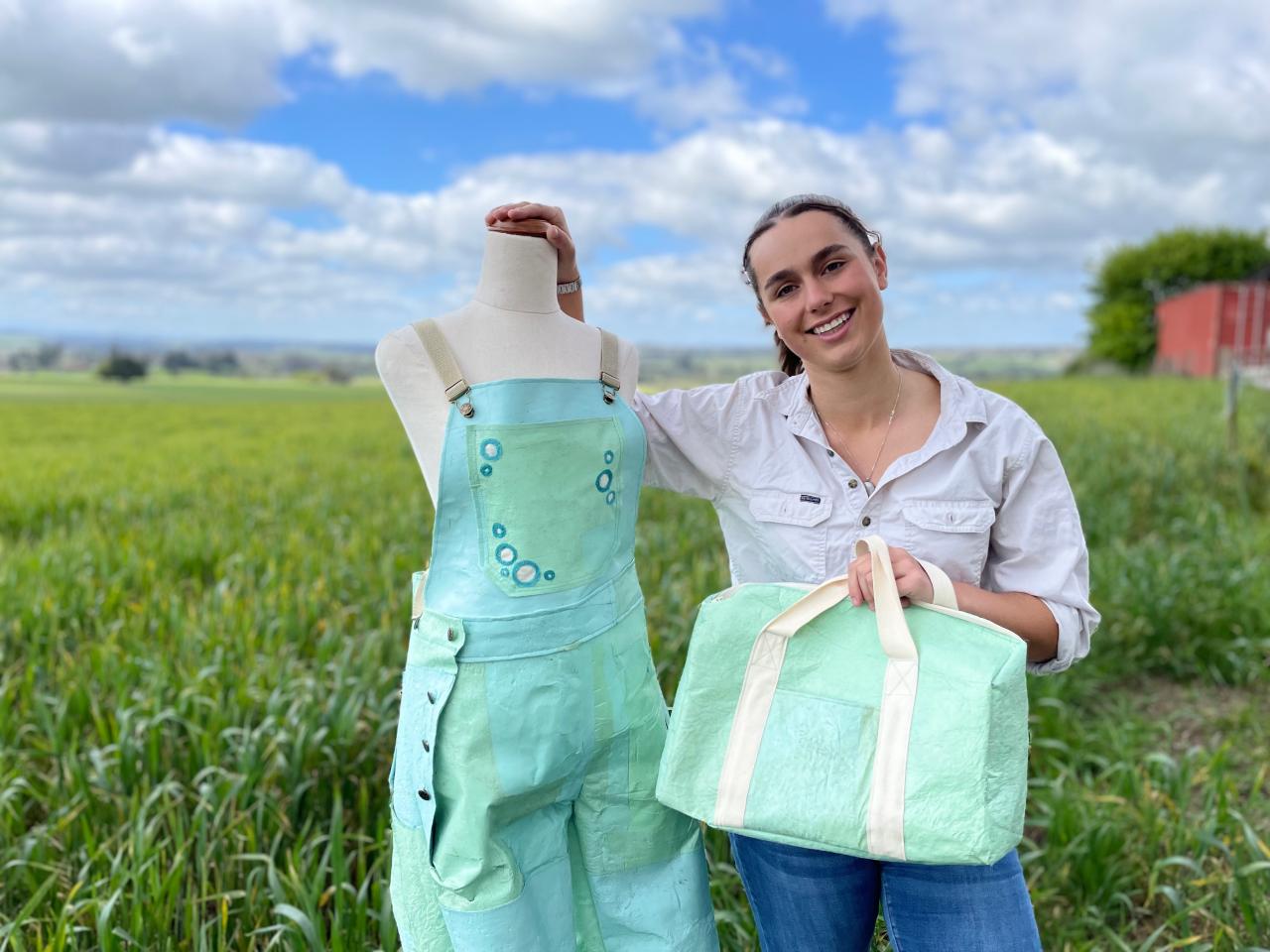
Meg has managed to combine her interest in textiles and science to create a pair of overalls and a bag using the wrap which is thin, stretchy and prone to being damaged one it’s discarded.
Growing up on the family farm Pine Grove, at Westwood, Meg knows well how much silage wrap is used.
The Kilbys’ mixed farm not only plants a variety of crops but grows silage for its cattle operation.
With no recycling options in the state farmers are forced to bury or burn the byproduct of protecting their hay and silage.
This scenario doesn’t sit well with the year 12 Scotch Oakburn student who this year took part in the University of Tasmania’s 'Connection Program' for Object Design.
Her mentor Anita Dean said that Meg is a passionate farm girl and deeply concerned about the impact of discarded silage wrap on the environment.
“This set her in motion to embark on a year’s journey of testing and experimenting to make silage wrap fabric and items she dubbed 'Preserved Protection' - the most fantastic pair of protective overalls and bag and she is thrilled she can happily run and cartwheel in them!
“On the farm they’ll probably get used to jet or drench some sheep.”
Meg said her initial idea to make a dress out of silage wrap morphed into something more practical that was also a nod to its role as a protectant, first for hay and now for humans.
“We had to keep a journal of our concept development and I became so invested in finding a solution that I wrote three journals,” Meg said.
“I wanted to find a way to manipulate the low density polyethylene without releasing harmful chemicals into the atmosphere and after many trials and failures I found that a low heat with an iron between sheets of baking paper, then stretching it and ironing again, created a PVC-like alternative.
“When I’d made about 20 x 60cm square sheets I sewed them together into patchwork fabric that I made into a bag and the overalls, which are surprisingly wearable, durable and repairable.”
Meg found that silage wraps shrinks by 43 percent when heated so she was able to use up far more wrap than she expected.
The two tones in her overalls were created by using both new and older, faded plastic and she even added decorative stitching around holes, backed with calico, for added interest.
Her bag has proved particularly handy - she’s used it to cart her school gear around for months.
The course will count towards Meg’s ATAR score for University, where she looks set to study engineering in Melbourne.
“I wanted to use a waste product that is an example of environmental imbalance in agriculture practices and transform it by manipulating the material into a set of functional items.
“I believe I’ve achieved that, although there’s a lot more that could be done to make it better.
“Hopefully someone will find a way to properly recycle silage wrap in Tasmania that is viable and helps solve a problem for farmers in the future.”



Add new comment